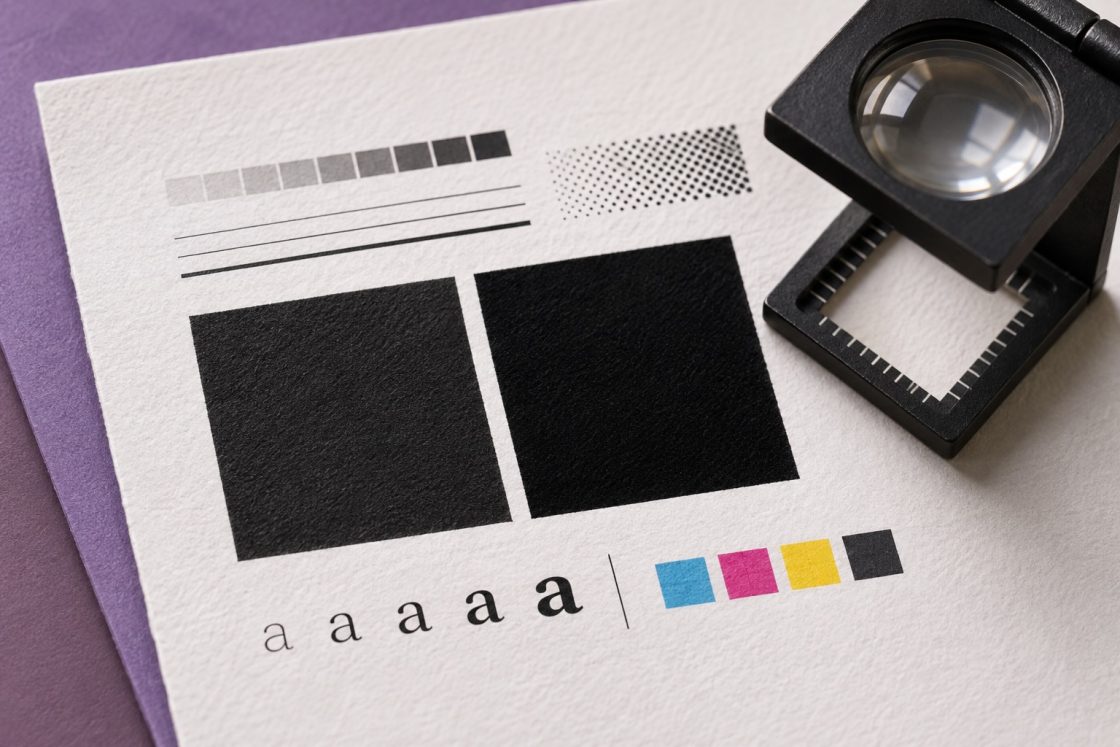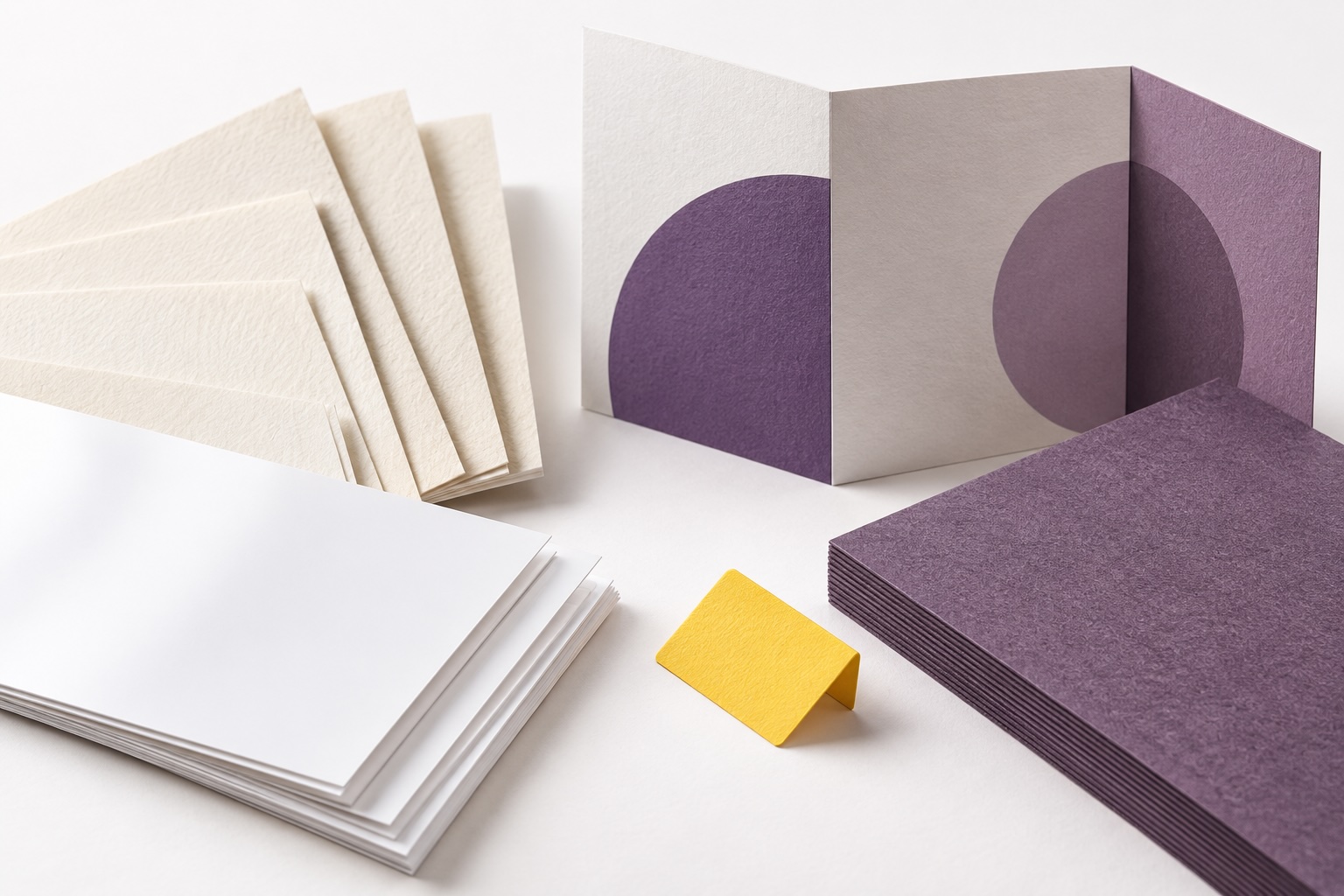
Paper is an active part of a printed design. Its shade, surface, opacity and stiffness influence how the piece looks, feels and functions. The same artwork can appear noticeably different on a smooth coated sheet and a textured uncoated stock, so material decisions belong near the beginning of the process.
Weight alone does not describe a paper completely. Two stocks with the same grammage can differ in thickness, stiffness and surface character. For a booklet, opacity affects how much printing shows through from the reverse side. For a folded piece, grain direction and the need for creasing should be discussed with the print provider.
Selecting paper also means considering use: will the piece be mailed, written on, handled frequently or kept as a reference? Physical samples and a folded dummy help answer questions that a screen cannot. The right stock supports the purpose of the design as well as its appearance.