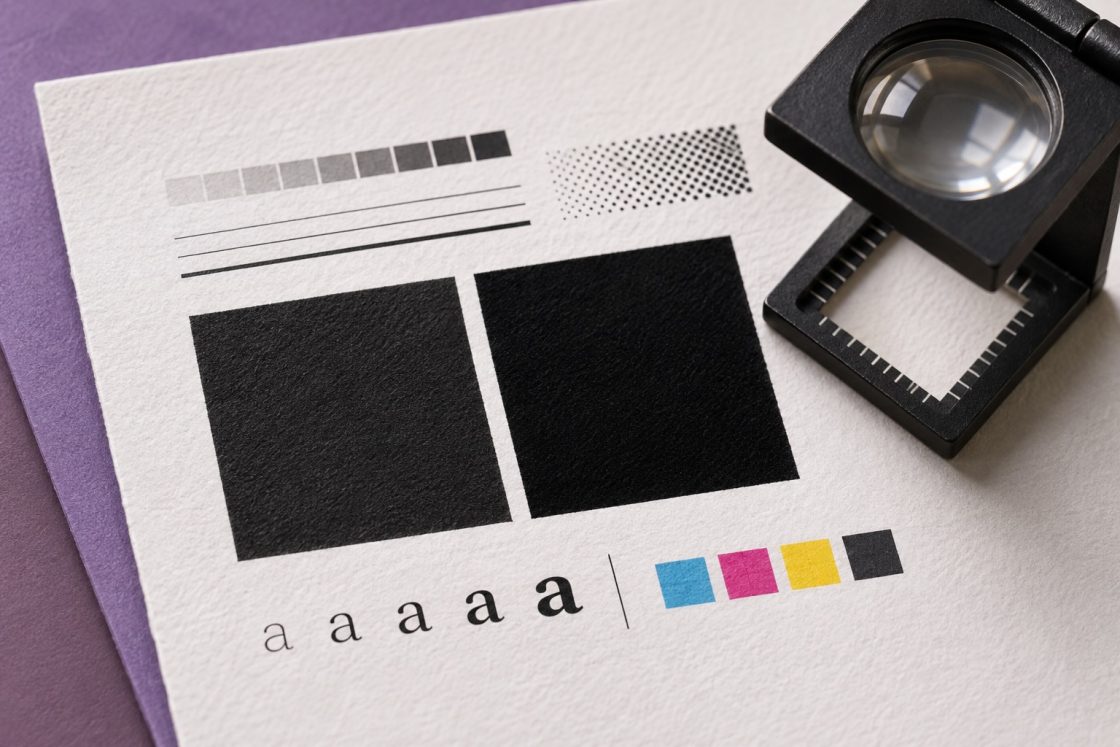

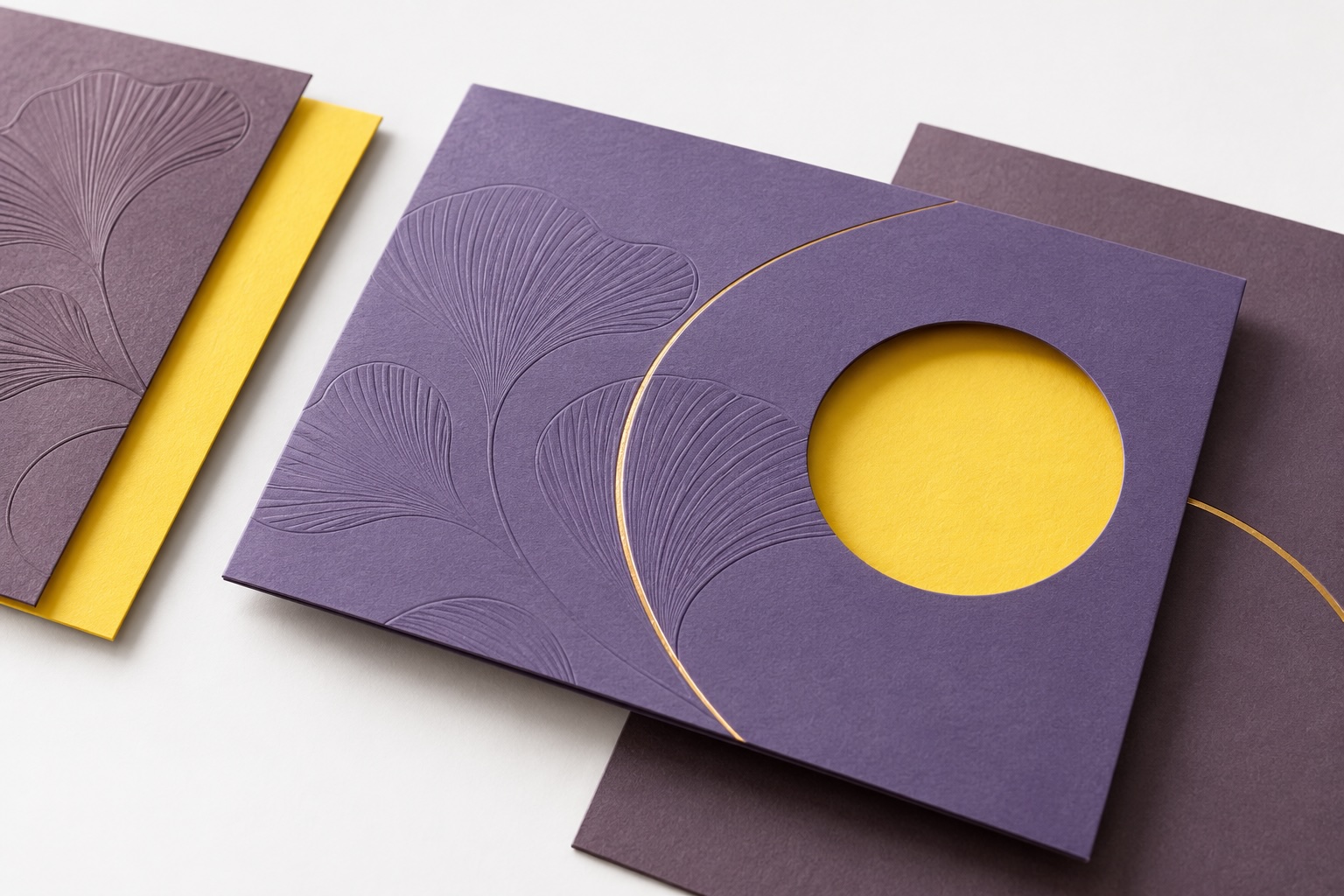
Print finishing adds another dimension to a design through texture, reflection and physical form. Embossing creates a raised impression, foil stamping introduces a distinct surface effect, and die cutting changes the shape or openings of a piece. Each technique can reinforce the concept when used with a clear purpose.
These decisions need to be planned alongside the artwork. Fine details, registration, folds and the chosen stock can affect what is practical. Production artwork may require separate, clearly named elements for each process, prepared to the finishing supplier’s specifications.
A physical sample is especially useful when the result depends on touch or changing light. Reviewing it with the printer helps establish realistic expectations before the full run. Finishing works best when it contributes to the idea, rather than simply adding another effect.